rotarycb1934@gmail.com
+91 80 2212 0317
Rotary House of Friendship 20, Lavelle road, Bengaluru
Happy reading!
Your Rotator Team 2025–26
RCB International Film Festival 3.0 – A Resounding Success
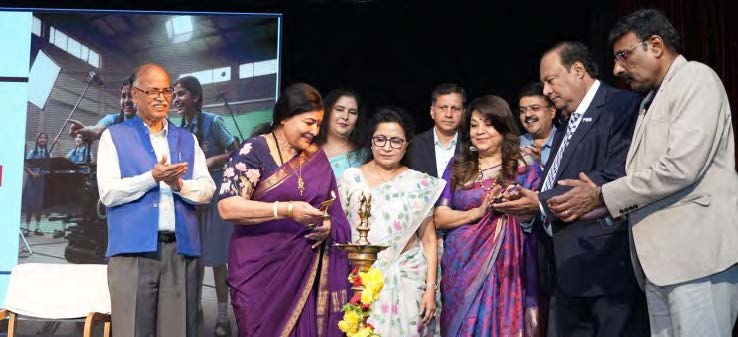
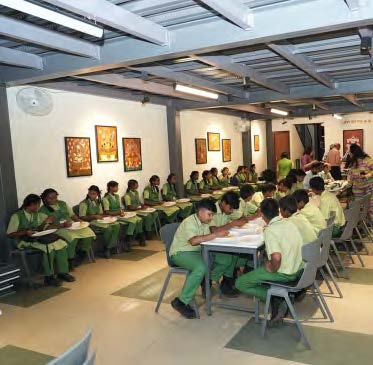
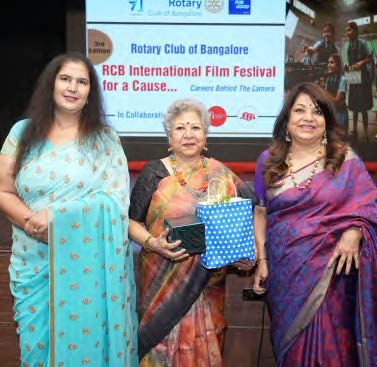

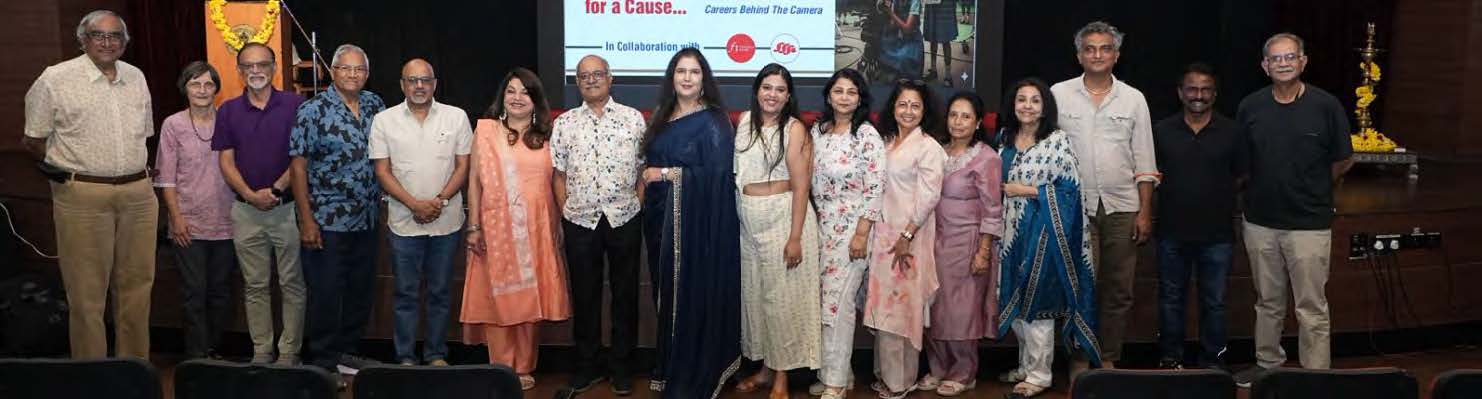
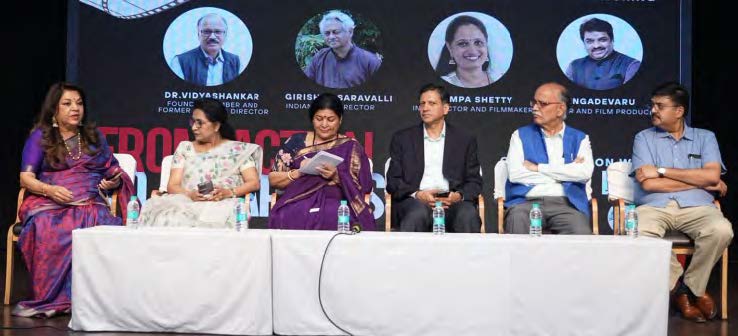
The 3rd edition of The Rotary Club of Bangalore International Film Festival held on April 11 & 12, 2026, at Bharatiya Vidya Bhavan, Race Course Road, Bengaluru, concluded on a high note, celebrating the power of cinema while championing a meaningful social cause empowering young girls from marginalised communities to explore careers behind the camera.
Inauguration The festival was inaugurated by Dr. Jayamala, President of the Karnataka Film Chamber of Commerce,the apex body of the Karnataka film industry. In her inspiring address, she expressed wholehearted support for the initiative and emphasized the urgent need to create opportunities for women in filmmaking.
Attendance: . Day 1: 150 attendees. Day 2: 100 attendees
Day 1 Highlights
The festival opened with an engaging international lineup:
. Vietnamese Film-Impermanent Resident
. Bhutanese Film -I, The Song, which swept the Bhutan National
Film Awards (February 2025), winning:
Best Film Best Director,Best Original Score,Best Screenplay and Best Editor
. Regional Film-Amazing Anasuya, which concluded the day on a powerful note. The writer and director Seetha Ratnakar of the film was present for an engaging post-screening discussion, offering insights into the filmmaking process, the story and interacting with the audience, making the experience even more enriching.
Special Screening for RBV Children A heartwarming highlight of day 1, was a special screening for 50 children from RBV, offering them an enriching cinematic experience. The children were provided breakfast and lunch, making it a memorable and joyful day that introduced them to the world of meaningful storytelling.
Day 2 Highlights
Day 2 began with the Kazakhstan film – The Globe, followed by the Iranian feature At the End of the Day.
A major highlight was Harikatha Prasanga by Ananya Kasaravalli, a critically acclaimed film exploring the life of a Yakshagana artist known for portraying female roles and grappling with gender fluidity.
Ananya Kasaravalli’s insightful interaction with the audience revealed her extensive research involving over 300 artists, shedding light on the emotional and identity struggles experienced by performers immersed in gendered roles.
The festival concluded with the screening of Aachar and Co, produced by Ashwini Puneeth Rajkumar under the PRK Productions banner and written and directed by Sindhu Sreenivasa Murthy, who also starred in the film. Set in 1960s-70s Bengaluru, the coming-of-age story was praised for its nostalgia, humor, and authentic depiction of a traditional South Indian family. The film has received several accolades:
. SIIMA 2024: Best Actor in a Comedy Rol(Kannada) – Anirudh Acharya
. Chittara Star Awards 2024:
– Best Cinematographer- Abhimanyu Sadanandan
– Best Editor-Ashik Kusugoli
. Prajavani Cine Samman Awards 2024: Recognition for cinematography
Director Sindhu Sreenivasa Murthy engaged the audience in a lively discussion on authentically portraying Bengaluru’s cultural ethos of the era.
The festival achieved strong visibility through a strategic mix of aggregator platforms, social media campaigns, and influencer outreach, complemented by extensive coverage in leading publications.
Conclusion
The RCB International Film Festival 3.0 successfully blended global cinema with social impact, sparking conversations, inspiring audiences, and strengthening the movement toward inclusive storytelling. With enthusiastic participation and strong industry support, the festival has set the stage for even greater impact in the years to come.
-Rtn. Niska Nanjundaiah
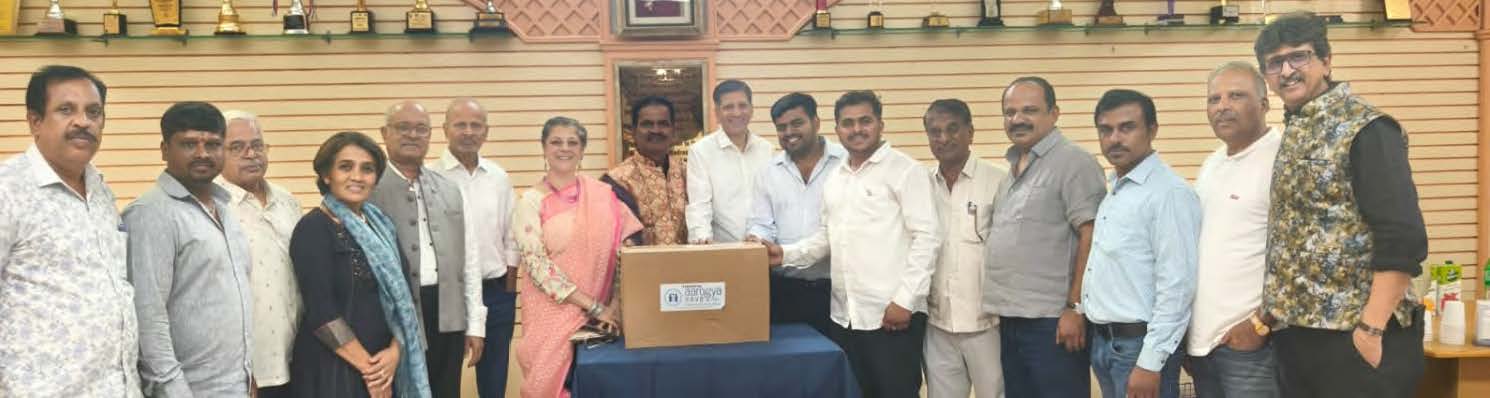
RCB Donates Medical Kit with Oxygen Concentrator to Rotary Turuvekere PHC
Building Liveable Cities: Duties, Systems, and Accountability
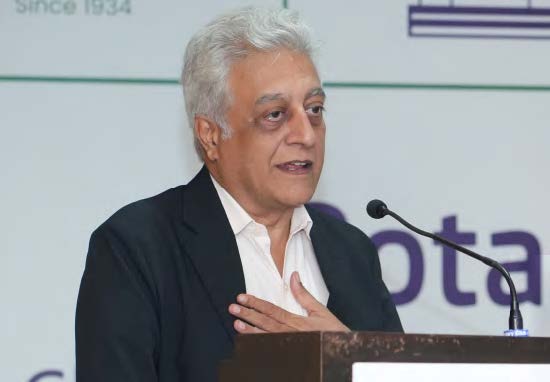
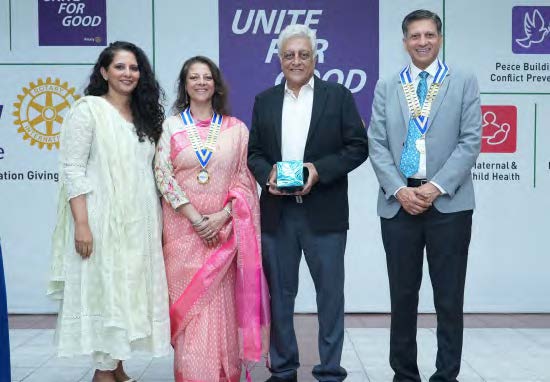
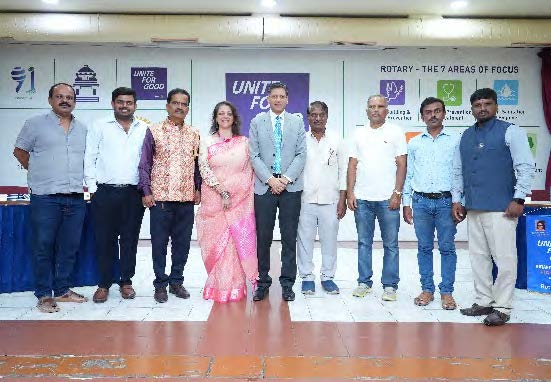
Renowned Architect and Urban thinker, Mr Naresh Narasimhan, speaking to Rotarians about Bengaluru’s future, offered a candid reflection on India’s urban dilemma. He began by noting that India is a curious country where citizens remember their rights but often neglect their duties. Rules are broken casually, almost as if defiance were a privilege, yet the same people, when abroad, become scrupulous about following regulations, conscious of civic responsibilities, and respectful of systems. This paradox, he argued, lies at the root of the challenges facing Indian cities. The demographic shift toward urban living is undeniable. In 1975, India’s urban population was about 620 million; by 2030, it is projected to reach 1.5 billion.
Bengaluru already exemplifies this reality, straining under the weight of migration as people flock to cities in search of employment and education. Narasimhan’s solution is bold: build 100 new cities, each designed to house 100 million people. These must be self-sustained, offering jobs, education, healthcare, and cultural life, so that migration is distributed evenly and the burden on megacities like Bengaluru is eased.
He was unsparing in his critique of current urban management, describing it as shoddy and fragmented. Policymakers, he said, approach development as a series of disconnected projects,flyovers here, metro lines there without a coherent system to integrate them. The result is chaos: infrastructure that fails to serve people seamlessly, neighbourhood’s that lack basic amenities, and a cityscape where disorder outside the city limits has seeped into its core. He urged policymakers to abandon tunnel vision and adopt systemic thinking. Cities are not a collection of projects; they are living organisms that require holistic management. Even footpaths, often overlooked, are essential for human movement and dignity. A city without walkable spaces is a city without soul.
Environmental decline adds urgency to the problem. Narasimhan warned that Bengaluru’s visibility has dropped to less than four kilometres, and if unchecked, the city could soon face its own “Delhi moment”a choking fog that renders it unliveable.
Pollution, poor waste management, and unchecked construction are eroding the quality of life. Without accountability and systemic reform, Bengaluru risks becoming a cautionary tale rather than a model city. Leadership, he emphasised, is central to change. Citizens must elect local leaders with vision, commitment, and people-centric solutions. Leaders who view city development merely as a series of projects will perpetuate the current mess. What Bengaluru needs are leaders who understand systems, who prioritise accountability, and who place citizens at the heart of urban planning. Accountability, he stressed, is the cornerstone of a clear, green, and liveable city. Without it, projects become vanity exercises, resources are wasted, and citizens lose trust. With it, cities can transform into spaces of dignity, opportunity, and sustainability.
Yet leadership alone is not enough. Narasimhan reminded his audience that citizens themselves must cultivate civic sense. It is not sufficient to demand rights without embracing responsibilities. People must ask: what can I do for my city? Simple acts like following traffic rules, respecting public spaces, participating in local governance can collectively transform urban life. A liveable city is not built by architects and policymakers alone; it is sustained by the daily choices of its residents.
For Bengaluru, the stakes are high. Once celebrated as India’s Garden City and later as its Silicon Valley, it now risks being remembered as a city that choked on its own success. But with systemic planning, visionary leadership, and responsible citizenship, Bengaluru can reclaim its place as a model of urban liveability.
The message is clear: stop thinking in terms of fragmented projects, start building systems; stop electing leaders without vision, start demanding accountability; stop treating duties as optional, start embracing them as essential. Only then can Bengaluru and India’s other cities become truly liveable.
ShieldHer 60th Session: Empowering Youth with Knowledge on Cervical Cancer Prevention
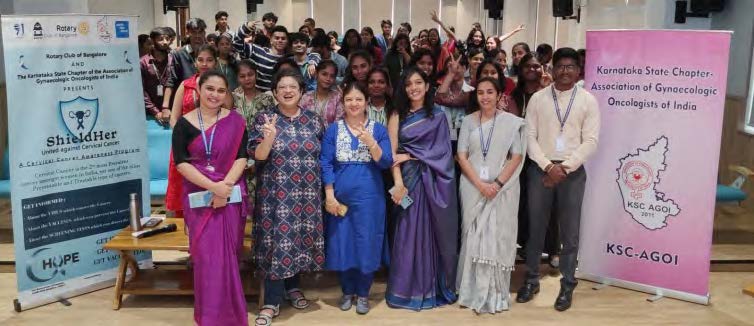
The 60th session of ShieldHer: United Against Cervical Cancer was held at Soundarya Institute of Management and Science, Bengaluru, on April 7, continuing the mission to strengthen awareness and prevention of cervical cancer among young adults.
The session featured Dr. Punyashree RM, Consultant in Gynae- Oncology and Gynae-Oncosurgery at Fortis Hospitals, Bengaluru, who delivered an insightful and engaging talk on cervical cancer, its risk factors, prevention strategies, and the critical role of early detection.
A total of 150 participants, including 140 students and 10 faculty members, actively engaged in the session. The interactive discussions reflected a strong curiosity and willingness to learn. Notably, only one participant reported prior HPV vaccination, underscoring the urgent need for increased awareness and preventive action.
Encouragingly, the session sparked significant interest in HPV vaccination, with many participants expressing willingness to get vaccinated and requesting an institutional vaccination drive.
We sincerely thank the management of Soundarya Institute, especially Dr. Prakash H.S. (Principal) and Ms. Shubha V S (Assistant Professor), for their valuable support and coordination in making the session impactful and successful.
-Rtn. Dr. Sowmya P. R & Rtn. Dr. Nita Roy.
