rotarycb1934@gmail.com
+91 80 2212 0317
Rotary House of Friendship 20, Lavelle road, Bengaluru
Happy reading!
Your Rotator Team 2025–26
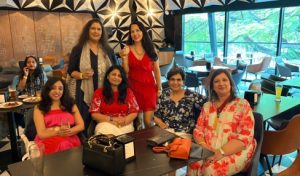
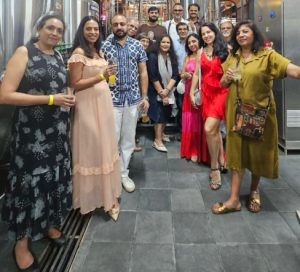
The Fellowship Committee celebrated Oktoberfest with great gusto at Arena Brewhouse on a lazy Sunday afternoon.
The day began with a tour of the microbrewery, where we got to see firsthand how beer is made. The Brewmaster busted the myth that lager is newly made beer and explained that it takes eight weeks to brew. We all agreed that beer is a common love for Indians and Germans alike, both in making and drinking it!
We sampled Indian Mead, Stout, IPA, Witbier, and Lager while enjoying a super fun game of Beer Ping Pong, which saw enthusiastic participation from many players. The spectators added to the excitement with plenty of clapping and cheering.
The DJ played all our favourite dance numbers, and RCBians danced non-stop for several hours. We were delighted by the enthusiastic participation of the spouses, who brought even more joy and laughter to this happy gathering.
The buffet spread and German dark chocolate cake were a super hit!
A big thank you to all the hosts and the Fellowship Committee for making the celebration memorable.
– Rtn. Sagarika Ghosal
Known Giving Creates Followers. Unknown Charity Creates Givers

Everyone gives, but how we give defines why we give.
I have had the opportunity to contribute every year to The Rotary Foundation’s (TRF) End Polio program, which involves a contribution of USD 1,000. This is separate from the regular project contributions for RCB, and I owe this habit to my dad.
Many times, we question the logic of giving to an unknown beneficiary when there is so much poverty and financial need around us.
But let’s look at both scenarios.
If I donate Rs. 100 and the beneficiary knows I gave it, what happens?
He says thank you, and I feel great. People see me give, they clap. My name goes on a plaque. My photo goes on Instagram, and everyone knows about my contribution.
When I help someone and they know I gave the money, I buy respect. I buy status. I receive thanks.
That is not charity. That is business.
But there is another kind of giving.
Giving where the person who receives it never knows who gave it. Where there is no thank you, no plaque, no photograph, no applause and no Instagram post.
Why is this a higher form of giving?
It protects dignity.
When a person knows who helped them, even if they are grateful, they may feel small. They feel indebted. They lower their heads.
When they don’t know who helped them, they raise their hands to God, to life and to humanity.
You have just preserved their self-respect and dignity.
Our scriptures call this Gupta Daan — a donation so secret that even your left hand should not know what your right hand gave.
It purifies the giver.
When no one knows, your ego gets nothing. There is no pride. No one will say, “He is a great donor.”
You are giving because you care, not because you want to appear caring.
Anonymous charity is a test, and it completely removes the audience.
The point is… Who are you when no one is watching?
In that transaction, I have already received. It multiplies.
When I help you and you don’t know who helped you, what will you do?
You will go and help someone else because you believe that kindness exists in this world and will 100% pass it on.
Known charity creates a follower. Anonymous charity creates another giver.
The answer is simple: Do both.
Give so that someone else’s pain can be forgotten.
Let your charity be like rain. The farmer who desperately needs the rain has his field bloom when it finally rains, but he never knows which cloud blessed him.
So don’t give to be remembered. Give so that you may be forgotten.
They won’t know you, but they will walk a little taller and live a little better because of you.
That is not just charity. That is character.
– PP Rtn. Ranga Rao

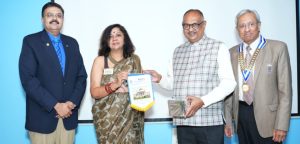
The Monday meeting at the Rotary House Fellowship carried a different energy, one that was both inspiring and deeply reflective.
Unlike many occasions when distinguished guests from outside Rotary are invited to share their journeys and experiences, this meeting belonged entirely to Rotarians. It was a gathering where wisdom flowed from those who had dedicated decades of their lives to service above self, and at the centre of the evening stood the chief speaker, Past District Governor Rotarian Sunil Zachariah.
As he addressed the audience, PDG Rtn Sunil Zachariah did not begin with grand achievements or impressive statistics. Instead, he shared an honest and personal story. He recalled the day he was inducted into Rotary. At that time, like many new members, he had little understanding of charity in its deeper sense. The concept of structured giving and contributing to larger humanitarian causes was still unfamiliar to him. Rotary, however, gradually transformed his perspective. As the years passed and his involvement in the organisation deepened, he began to understand the extraordinary power of charitable giving. He learned that even a small contribution could create a significant impact when directed toward meaningful causes.
That realisation eventually made him a regular contributor to The Rotary Foundation. He explained that one of the reasons he chose to support TRF consistently was the confidence he had in the institution. He knew where the money went, how it was utilised, and how it was transformed into projects that changed lives. For him, charity was never about the act of giving alone; it was about trusting that the resources would reach those who genuinely needed support.
As the gathering listened attentively, he delivered what would become the defining message of the evening. Charity, he said, should never be accompanied by expectations. The moment a giver begins to seek recognition, appreciation, rewards, or personal benefits in return, the true essence of charity is diluted. Genuine giving is selfless. The objective is not to receive something back but to bring hope, dignity, and opportunity into the life of another person.
He spoke passionately about the many causes that benefit from such giving. Whether it is healthcare services for the underprivileged, educational initiatives for disadvantaged children, environmental conservation projects, or Rotary’s historic campaign for global polio eradication, each act of charity creates ripples of positive change. Every contribution has the potential to touch lives, heal suffering, and strengthen communities. The focus, he emphasised, must always remain on the impact created rather than the recognition received.
The audience was visibly moved by his philosophy. His words resonated because they reflected not merely a theory but a life lived according to those principles. Rotarians in attendance found themselves reflecting on their own journeys of service and giving. The silence that followed his remarks was not emptiness but contemplation, as members absorbed the depth of his message.
Adding further richness to the discussion were several eminent Rotarians and Past Presidents, including Rtn Srinivasa Murthy, Rtn Gowri Oza, Rtn Ranga Rao, and Rtn Vijayarajan. Each of them shared personal experiences from years of charitable engagement and community service. Their stories differed in detail but converged on a common truth. They spoke about the immense joy derived from helping others and the satisfaction that comes from witnessing lives transformed through acts of generosity.
What stood out was the unanimity of their conviction. Every one of them echoed the sentiment expressed by PDG Sunil Zachariah. Charity, they agreed, ceases to be pure when it is tied to expectations. Service cannot be measured by what the giver receives. Its value lies entirely in what it achieves for others. The happiness that follows charitable action is not a reward sought beforehand but a natural consequence of having made a difference.
As the discussions progressed, the room became a powerful reminder of Rotary’s enduring values. Here were leaders who had spent years contributing not only funds but also time, effort, and personal commitment to causes greater than themselves. Their experiences demonstrated that philanthropy is not about wealth alone. It is about intent, compassion, and the willingness to serve humanity without seeking applause.
By the conclusion of the meeting, there was extraordinary clarity about the evening’s takeaway. The speakers may have come from different backgrounds and experiences, but their message was identical. It was simple, timeless, and profoundly relevant in a world often driven by transactions and expectations.
Give without expecting anything in return. Give because someone needs help. Give because society becomes stronger when compassion triumphs over self-interest. Give because true charity finds its meaning not in recognition, but in the lives it transforms.
And as Rotarians departed that evening, one thought lingered above all others: give selflessly, and let the gift itself speak.

STRONG HER, an initiative of the Rotary Club of Bangalore, reached 220 young women at St. Anne’s Girls PU College, Halasuru, on 31st October.
Through a powerful and interactive self-awareness session, I encouraged the girls to trust their instincts, recognise warning signs in people’s behaviour, understand personal, emotional and digital boundaries, and stand up for themselves without fear or guilt. We addressed the dangers of manipulation, peer pressure and misplaced trust, reinforcing that their bodies belong to them, their NO matters, and asking for help is a sign of courage, never shame. The girls also learnt the practical S.A.F.E.R. formula—Stop, Assess, Firm up your boundary, Exit, Reach out and Report—to help them recognise unsafe situations and respond with greater awareness and confidence.
What made the morning truly special was watching the girls transform before our eyes. Shy, hesitant faces gave way to bright eyes, raised voices, confident expressions and empowered body language. As they practised saying “STOP!” and took the STRONG HER pledge, we witnessed more than a session on personal safety—we saw young women discovering the power of their own voices and the courage to stand up for themselves.
The session was attended by Dr. Maneesh Paul, Community Services Director, Rtn. Sapna Paul, Malavika Krishnamurthy, Gobind Mohinani, Savari Gotadki and Rotaractor Veekshita.
In one morning, 220 girls took a step towards becoming more aware, assertive and confident in protecting themselves.
– Rtn. Minku Buar
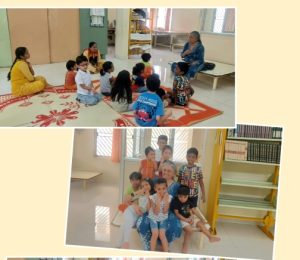
A storytelling session of The Friendship – a tale of a frog and a snake who were very clear about the moves behind their friendship, was held at the Shankara Rotary Library on 31st October 2026.
The children were engrossed.
It was a joy to watch the kids react – a little frown and dislike for the cunning snake, cheers, sympathy and worry for the innocent frog at every page turn!
The session ended with a lively discussion on trust and choices.
Moral: Once Bitten, Twice Shy.

As part of the RCB Speaker Series 8.0 | Episode 4, on 29th October, I had the pleasure of leading an insightful session on The Emotional Load We Carry — And Why We Need to Decompress, engaging with 120 Rotaractors on Zoom from 14 Rotary clubs, including participants from Rwanda.
We explored how the pressures of expectations, constant comparisons, the fear of disappointing others, and the habit of pushing our feelings aside can quietly build into emotional exhaustion. Through relatable everyday situations, we reflected on an important distinction: functioning is not the same as processing. Just because we carry on with our responsibilities doesn’t mean we’ve acknowledged or addressed what’s happening within us.
The session focused on practical ways to recognise, process, and release our emotional load through self-awareness, healthy expression, setting boundaries, mindful pauses, and simple decompression practices. We also explored how to respond to our emotions rather than suppressing them or allowing them to dictate our actions.
The response from the participants was heartwarming, and the session was very well received.
My hope is that each person left with a gentle reminder: we don’t have to have everything figured out, pretend to be fine all the time, or carry every burden alone.
Sometimes, caring for ourselves begins with one simple question:
“What am I carrying that I no longer need to carry?”
– Rtn. Minku Buar
