rotarycb1934@gmail.com
+91 80 2212 0317
Rotary House of Friendship 20, Lavelle road, Bengaluru
Happy reading!
Your Rotator Team 2025–26
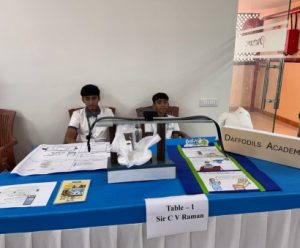
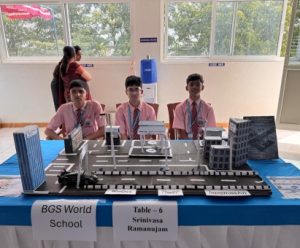
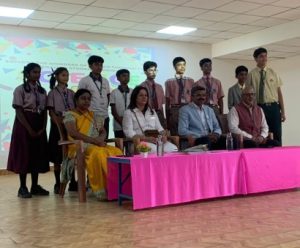
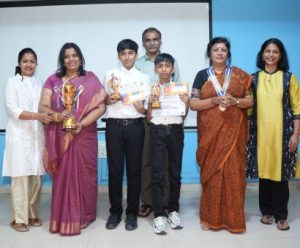
The C. V. Raman Science Fair, organised by the Rotary Club of Bangalore at Rotary Bangalore Vidyalaya, held on November 19, 2026, witnessed enthusiastic participation from 17 schools and 29 teams, showcasing innovative projects addressing real-world challenges such as women’s safety, robotics, threat awareness, rainwater harvesting and sustainable living.
The event was inaugurated by Chief Guest Dr. Jagadish Miur, along with the esteemed judges, Rtn. Dr. Nita Roy and Rtn. Satej Alur.
Rtn. Dr. Anju Agadi, Director – Youth Service Committee, highlighted the importance of nurturing scientific curiosity, creativity and innovation among young minds.
The Chief Guest, Dr. Jagadish Miur, emphasised the role of adults in identifying the talent in a child, and encouraging and nurturing it to facilitate the growth of that talent.
Winners:
First Prize: Daffodils Academy – Wee Care Project
Second Prize: Hill Rock National Public School – Brain Computer
Third Prize: B. G. S. World School, Chikkaballapur – Wireless Power Transmission
Consolation Prize: Rotary Bangalore Vidyalaya – Women Safety, Empowerment and Cyber Security
The prizes and trophies were presented to the winning teams on November 23, 2026, at KSBA, Vasanth Nagar.
Our sincere appreciation to Rtn. Satej Alur, Ann Rekha Rudra and Rtn. Nitin Shah for their generous contributions towards the prizes and trophies. Special thanks to the Rotaractors for their enthusiastic support in ensuring the smooth conduct of the event.
The Science Fair was a wonderful celebration of curiosity, creativity and innovation, providing young minds a platform to explore, experiment and showcase their ideas. A truly inspiring initiative!
– Rtn. Sapna Paul
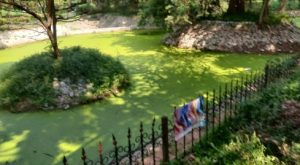
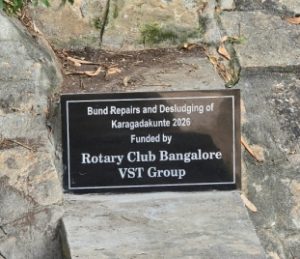
Cubbon Park requires approximately 1.5 to 4 million liters (MLD) of water per day to maintain its green cover, with higher demand during summer. Water is supplied through 1.5 MLD of treated sewage water, supplemented by rejuvenated open wells, borewells, and rainwater harvesting.
Rejuvenation of the Kunte will support the water requirements as well as the flora and fauna of Cubbon Park. The annual Karagada procession starts from this point, and hence its name.
The total cost of the Karagada Kunte project was Rs. 9,04,000, with contributions from Rtn. Kashinath Pai through the VST Trust (Rs. 6,47,000), Rtn. Dileep Kumar Pillai (Rs. 1,20,000), DG Ravishankar Dakoju (Rs. 1,00,000), and Rtn. Vijayarajan (Rs. 50,000).
The project was implemented by the India Cares Foundation (ICFn) and Friends of Lake (FoL). The main activities were:
Deweeding and desilting.
Stone pitching at erosion points, along with repair and strengthening of the bund.
Repair of inlet and outlet weirs to control the slope angle of the edge of the Kunte and improve the stability of the soft subsoil.
In spite of unexpected rains that caused some delays, the project was completed within 3 months.
The project has helped improve the flow of water through the inlet channel, prevent the wastage of rainwater that was overflowing due to broken bunds, increase groundwater percolation, and improve soil fertility around the Kunte as waterlogging has stopped.
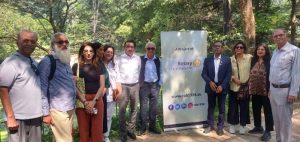
On 19 Nov 2026, Rotary Club of Bangalore (RCB), ICFn, and FoL handed over the restored Kunte to the Cubbon Park authorities in the presence of a large number of RCB members, including the DG and current and past presidents.
The Deputy Director of the Park thanked RCB and invited them to support other water security projects in the city.
– Rtn. Dr. E. G. P. Haran
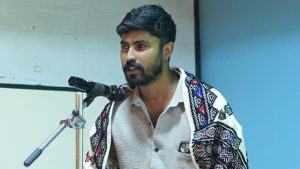
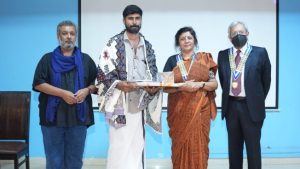
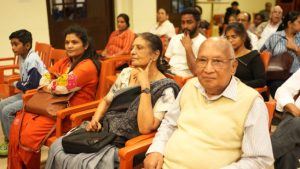
The Monday meeting at RCB was unlike the club’s usual gatherings. There were no long speeches, no spirited debates, and very little formal discussion. Instead, members found themselves immersed in darkness and quiet reflection as they watched ERRAHM: A Verge of Death, a thought-provoking documentary by Aravind Ashthars. What unfolded on the screen was not merely the story of a tribal community but a poignant reminder of the fragile bond between people, culture, and the natural world that sustains them.
The lesser-known documentary focuses on the Todas, one of the oldest indigenous pastoral communities of the Nilgiri Hills in Tamil Nadu. The title Errahm is closely associated with the Toda worldview and serves as a metaphor for a culture standing at the edge of decline, giving profound meaning to the film’s subtitle, A Verge of Death. Through compelling visuals and an understated narrative, the documentary explores the struggle to preserve Toda identity, language, traditions, and way of life in the face of rapid modernisation, urbanisation, and cultural erosion.
For centuries, the Todas have lived in harmony with the rolling grasslands and shola forests of the Nilgiris. The film takes viewers into their world, introducing them to the distinctive barrel-vaulted huts known as munds, symbols of an architectural tradition rooted in simplicity and ecological wisdom. Equally central to Toda life is the sacred buffalo, an animal that occupies a unique place in their religion, economy, social structure, and daily existence. The documentary delicately captures how rituals, dairy practices, oral traditions, and celebrated embroidery patterns are woven together to create a cultural fabric unlike any other in India.
Yet the heart of the film lies not merely in documenting tradition but in highlighting its vulnerability. The documentary paints a sobering picture of shrinking grazing lands, changing patterns of land use, invasive plant species, and the growing disconnect between younger generations and ancestral practices. It reminds viewers that the challenges confronting the Todas are not simply about the possible loss of a small tribal community. They represent the gradual disappearance of a living knowledge system that has coexisted with the Nilgiri ecosystem for generations, sustaining both people and landscape in a delicate balance.
Particularly striking was the film’s emphasis on the ecological degradation of the Nilgiris. The encroachment of invasive weeds and the gradual destruction of virgin grasslands and shola forests emerge as parallel threats to both biodiversity and culture. The documentary reinforces an enduring truth: indigenous communities are inseparable from their environments. When the landscape changes irreversibly, traditions rooted in that landscape inevitably begin to fade. Through this lens, ERRAHM becomes more than an ethnographic record; it becomes a cautionary tale about conservation, sustainability, and cultural survival.
As the documentary unfolded, Rotarians watched with rapt attention. The silence in the room spoke volumes. Several members were intrigued by the intricately handcrafted Toda shawls featured worn by Aravind Ashthars and were keen to know more about the craftsmanship behind these distinctive textiles. Others expressed curiosity about Toda jewellery designs and were surprised to learn that jewellery does not hold a place within the community’s cultural identity, a lesser-known aspect of Toda culture.
Following the screening, filmmaker Aravind Ashthars briefly shared the inspiration behind the project. In a conversational interaction, he explained how the documentary emerged from his concern over the ecological degradation of the Nilgiris and its far-reaching impact on the native Toda community. His objective, he noted, was not merely to document a people but to draw attention to the intricate connections between environment, identity, and cultural continuity.
The message resonated clearly throughout the evening:
When nature disappears, a culture rooted in it is also at risk of disappearing.
It was a simple yet profound observation that lingered long after the documentary ended.
The meeting, which gradually slipped from evening into night, had begun on a celebratory note with the distribution of trophies to winners of the recently conducted C. V. Raman Science Fair at Rotary Bangalore Vidyalaya. Yet it concluded with a deeper reflection, leaving members with a renewed appreciation for the importance of preserving both cultural heritage and the natural landscapes that nurture it.
In the end, ERRAHM: A Verge of Death was not merely a film screening; it was an invitation to listen to a fading voice from the hills and to recognise that safeguarding a culture often begins with safeguarding the land beneath its feet.
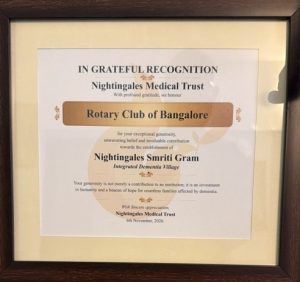
We are delighted to share with the Club our first big-ticket service project was inaugurated on 6th November 2026.
Nightingale Elder Care Hospital has been doing exceptional work in and around Bengaluru for the past 25 years, providing care and dignity to the elderly and vulnerable. Our association with Nightingale and Mrs. Radha goes back nearly a decade, during which we have been privileged to support their wonderful work.
Nightingale has now taken a remarkable step by establishing a 100-bed hospital at Doddaballapur, providing free care to underprivileged patients suffering from dementia and other neurological conditions.
For the past four months, we have worked to support this noble initiative. We are extremely happy to announce that securing ₹19 lakh from P D Navkar and Company to establish a comprehensive stainless-steel kitchen facility for this hospital has been accomplished. This will directly support the nutritional needs and daily care of these vulnerable patients.
This achievement deserves special recognition.
Our heartfelt thanks and congratulations to P D Navkar and Company, our long-standing supporters; to our Past President Rtn. Rangarao, for identifying this truly deserving project; and to Rtn. Sohil Shah, whose efforts and coordination with P D Navkar and Company helped make this possible.
The inauguration of Nightingale’s Smriti Gram – Integrated Dementia Care Village was held on Friday, 6 November 2026, at 11:00 AM and was attended by several donors and esteemed guests.
The highlight of the event was that the Centre was inaugurated by the first resident along with Dr. Radha.
RCB was prominently displayed on the main building as one of the institutional donors, and the kitchen unit also bore the signage of RCB.
Our club was presented with a plaque of gratitude, which was received by PP Rtn. Rangarao, who also said a few words to the gathering.
– Rtn. Maneesh Paul
Community Services Avenue of the Rotary Club of Bangalore, along with the College of Pharmaceutical Sciences, Dayananda Sagar University (Dean Dr. Pushpa Sarkar), organised World Antimicrobial Resistance Awareness Week (WAAW) from 19–23 November to raise awareness about antimicrobial resistance (AMR) and promote the responsible use of antimicrobials.
It emphasises the theme “One Health, One Action: Prevent AMR Now.” These events were organised in collaboration with AMR Futures Lab, University of Edinburgh, and RCB, which also funded the activities.
The Inaugural Ceremony was inaugurated with an AMR pledge as a reminder of the responsibility we carry.
A Scientific Poster Presentation was conducted to promote awareness of AMR and encourage scientific learning among students.
1. Leaflet Preparation Competition
A Leaflet Preparation Competition was organised to encourage students to creatively communicate AMR awareness and the One Health concept. 25 participants and attendees were involved.
2. Interactive AMR Quiz Competition
An interactive AMR Quiz Competition was conducted to assess and enhance students’ knowledge of antimicrobial resistance, responsible antibiotic use, antimicrobial stewardship and infection prevention.
The competition was conducted in three rounds, comprising written, oral and interactive quiz rounds, encouraging teamwork, quick thinking and scientific knowledge.
3. SciToon Competition – Creative Scientific Communication
SciToon provided a creative platform for students to communicate scientific concepts related to antimicrobial resistance through cartoons, illustrations and infographics. More than 17 teams participated in the 60-minute activity.
4. Nukkad Natak – Street Play
Two street plays were presented by 25 Pharm.D students organised into two teams at Doddamaralavadi. The performances focused on antimicrobial resistance, antibiotic misuse, self-medication, treatment adherence and infection prevention.
5. AMR Awareness Walkathon
An AMR Awareness Walkathon was organised in association with the Rotary Club, Bengaluru, from Harohalli Town Circle to the Community Health Centre, Harohalli, and back.
Faculty and students interacted with residents, pharmacists, police personnel and community healthcare workers, promoting responsible antibiotic use, avoiding self-medication, prescription adherence and infection prevention.
6. Health Information Board
As part of our continued commitment towards creating awareness and promoting better health practices, we unveiled the Health Information Board, which serves as a valuable platform for sharing health-related knowledge, spreading awareness and encouraging informed health choices among students, faculty and the wider community.
7. Health Calendar
To keep health awareness alive throughout the year, we created the Health Calendar. This calendar is designed to serve as a reminder of important health-related information and encourage us to make health and well-being a priority in our everyday lives.
– Rtn. Dr. Maneesh Paul
