
HA HA HARAPPA
Unearthing laughter from the Indus Valley!
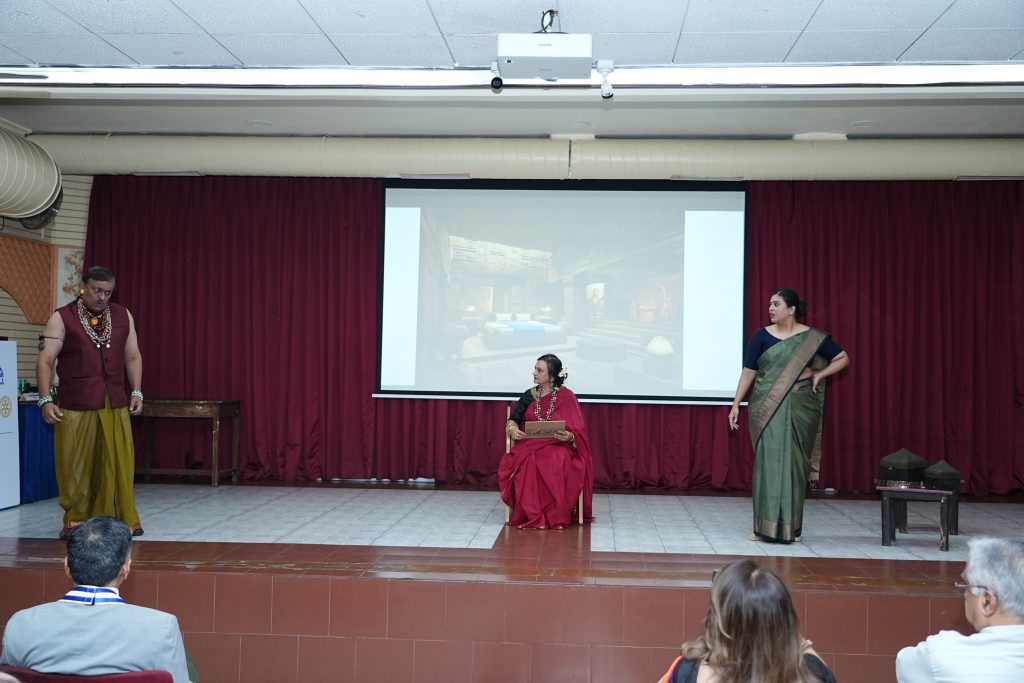
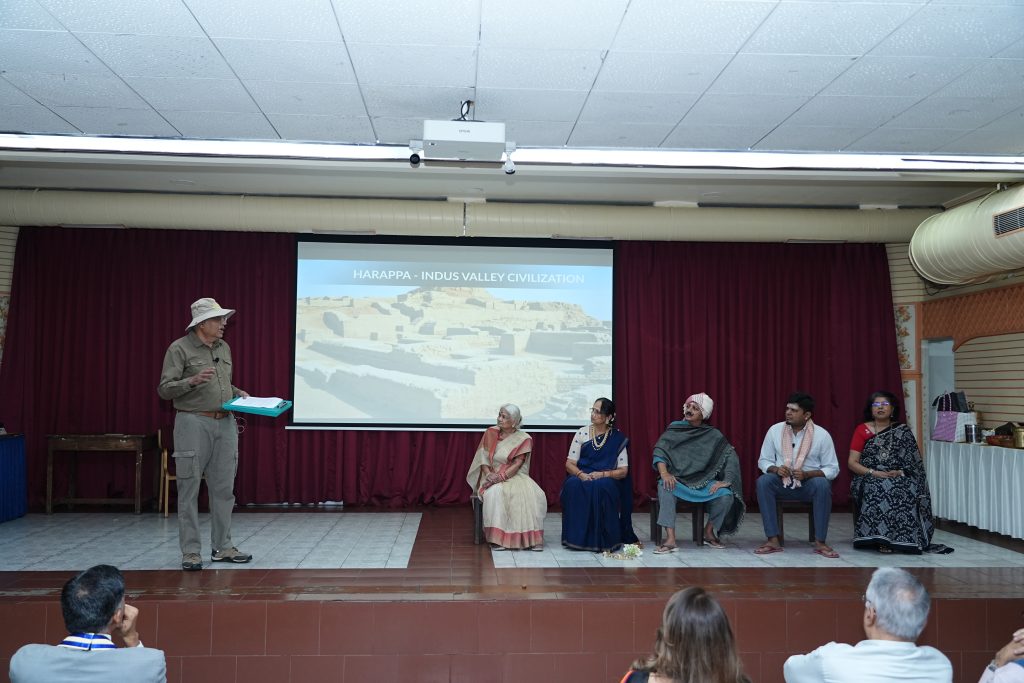
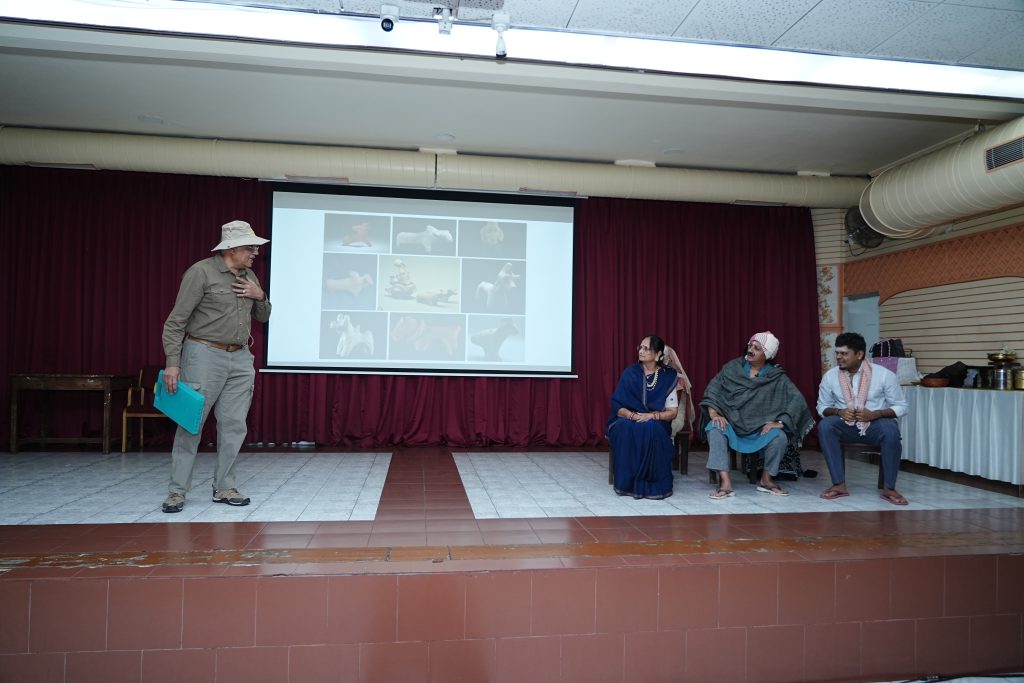
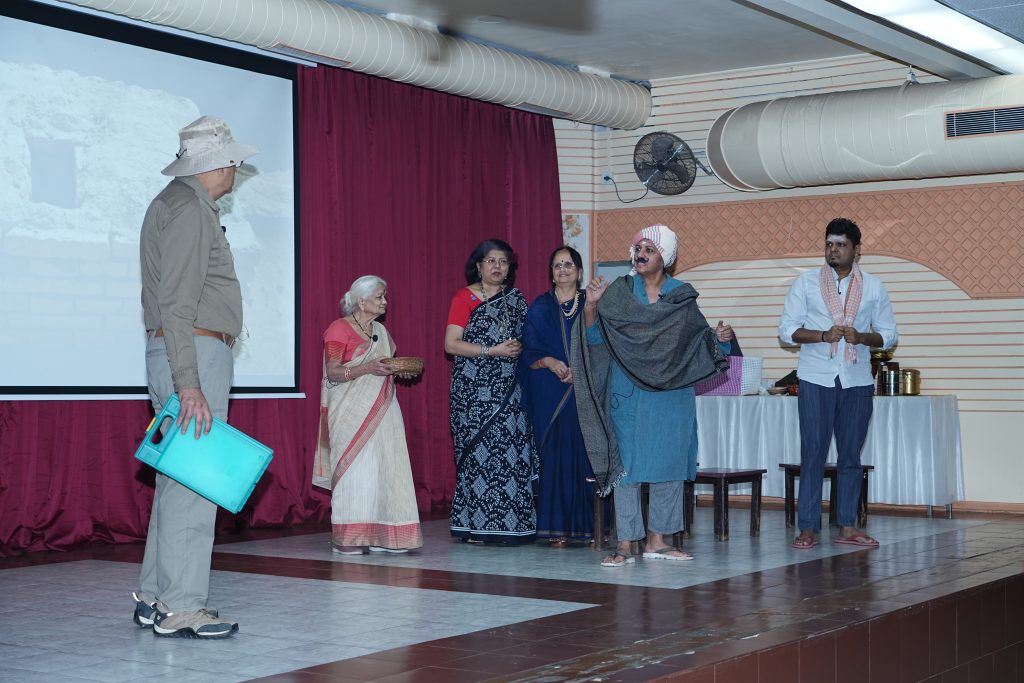
The Fellowship evening this Monday witnessed an uproarious evening of satire, wit, and intelligent comedy in the form of a play titled “Ha Ha Harappa” brought to life by the dynamic father-son duo of Rtn. Nagachandra and Amit Nagachandra. While Amit penned the script, Rtn. Nagachandra adeptly directed and anchored the performance, ensuring a seamless flow of laughs and insights.
Setting the tone for the evening, RCB President Sukhen Padmanabha drew a humorous parallel between the Harappan civilisation and the Rotary Club of Bangalore, suggesting that just as the Harappans endured through their camaraderie and ingenuity, so too does RCB thrive through the strength of its friendships.
The play cleverly highlighted both the similarities and striking contradictions between contemporary society and the ancient Harappans. The narrative unfolded through a string of delightfully absurd yet thought-provoking vignettes.
The opening scene, set in present times, saw an earnest archaeologist, summoned by a rather clueless MLA, attempting to educate villagers on the significance of the Harappan legacy. This interaction quickly descended into comic confusion—one villager mistaking the archaeologist for a bus conductor, another confusing the Indus Valley with INDU’s Valley, pointedly mirroring today’s casual ignorance of history.
The archaeologist’s comparison of Harappan hygiene—where every house boasted toilets and proper sanitation—to present-day India’s struggle with open defecation struck a nerve, albeit with a comic punch. Incidentally, RCB has recently renovated the toilet facilities at Rotary Bangalore Vidyalaya.
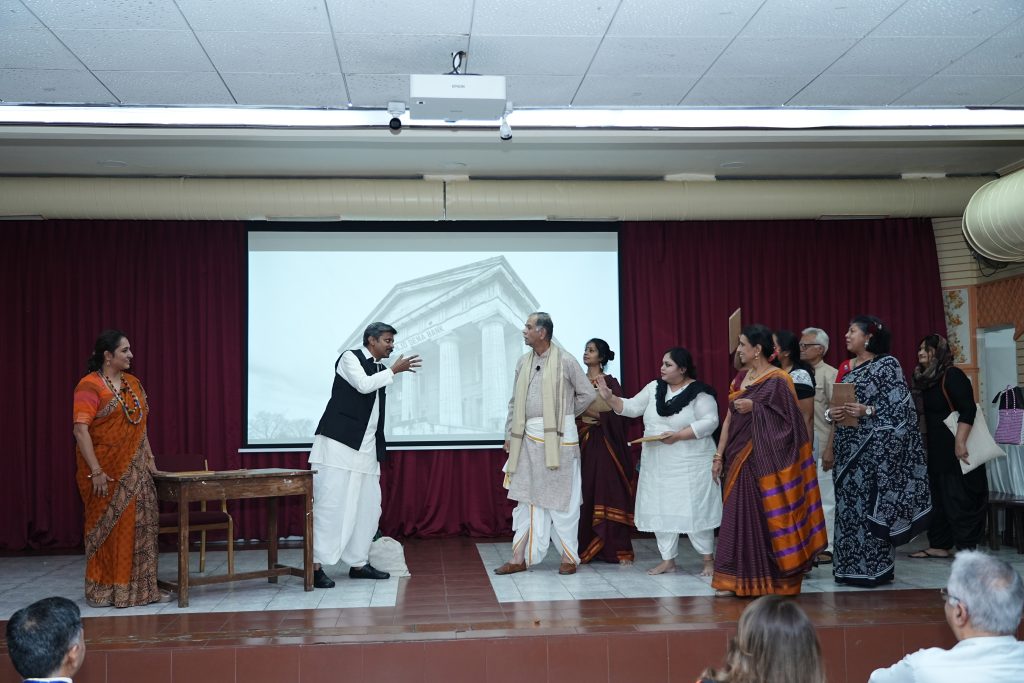
Another scene invoked the superior engineering of the past. Harappan bricks, durable enough for the British to lay railway lines, were juxtaposed with today’s shoddy construction standards. A self-styled martial arts enthusiast managed to smash a modern brick with flair, only to injure himself hilariously when attempting to break a Harappan one. A wry comment by a woman, relieved that her roof collapse (and consequent mother-in-law’s demise) happened with modern bricks, drew laughter tinged with dark irony.
The segment on Harappan clay tablets played cleverly on contemporary communication. While we marvel at ancient scripts, we still cannot decode—unlike Egyptian hieroglyphics—one character quipped that modern-day handwriting, particularly that of doctors, is equally indecipherable. The scene reached its crescendo with a mock “breaking news” video: Artificial Intelligence finally deciphers a tablet, only for the message to read, “Please don’t forget to bring milk and eggs on your way back.” The anticlimax was priceless.
Jewellery, an eternal obsession, also came under comic scrutiny. In Harappan times, both genders adorned themselves—a norm that echoed through a scene where a wife discovers her missing jewellery adorning her husband instead.
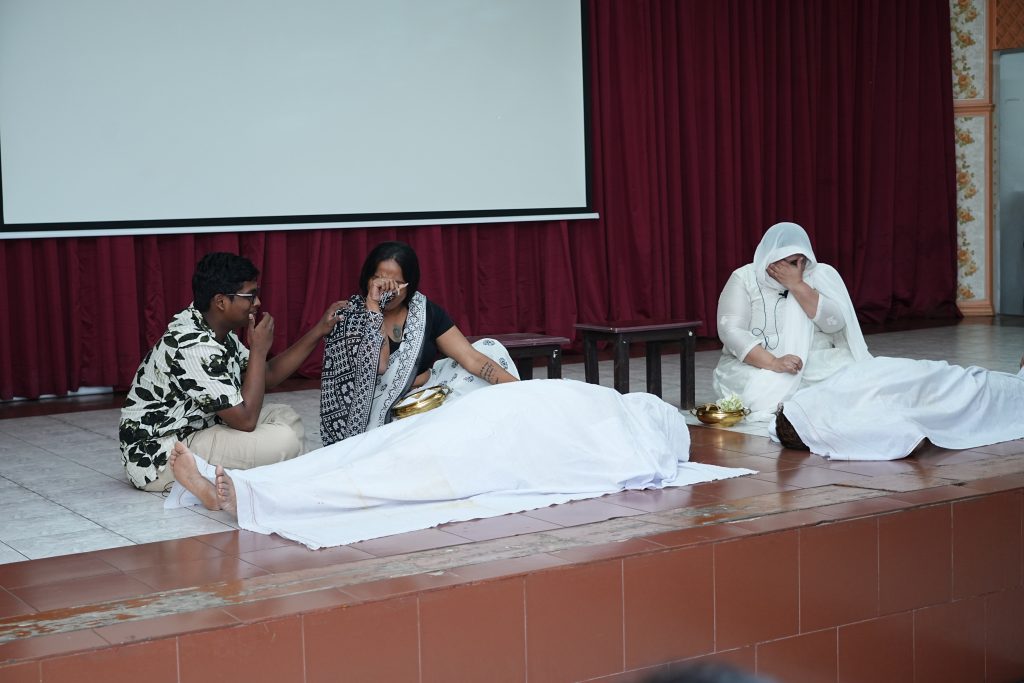
The funeral ritual sequence was another gem. The ancient tradition of burying the dead with food for their journey to the afterlife, still practised in many parts of the country, was treated with both reverence and irreverent humour. The idea of feeding a corpse, explained with comic solemnity, brought out the absurdity and poignancy of customs that survive the ages.
“Ha Ha Harappa” is a satirical mirror to our civilisation, far more than a comical romp through ancient history. It cleverly wielded humour as a scalpel to dissect modern social attitudes, infrastructural decay, pseudo-intellectualism, and cultural myopia.
Through hilarity and historical insight, the play held up a mirror! The spirited direction, witty script, and engaging performances ensured that the play was not merely entertaining but also intellectually stimulating. One left the evening with a smile—and a surprising amount of knowledge about the Harappans.
 Previous Post
 Next Post